Apple Health
Steps, workouts, weight, calories, sleep, heart rate and distance on iOS.
Two integration questions arrive from two different rooms, and neither one answers the other. This page keeps them apart.

Step sources
Steps come from Apple Health on iOS and Google Fit on Android before anyone buys anything. A tracker adds detail, not access.
Steps, workouts, weight, calories, sleep, heart rate and distance on iOS.
Automatic through the paired iPhone. Not a second connection.
OAuth connect. Steps, workouts, heart-rate zones and sleep stages, with up to 30 days of history.
Syncs on app open and on demandA three-step OAuth 1.0a flow, then real-time webhook push rather than periodic polling. Activities, GPS routes and backfill included.
Reconnect every 60 daysChosen as the Android device source.
Amazfit and Zepp, Mi Band, Huawei, Nike Run Club, Strava and others.
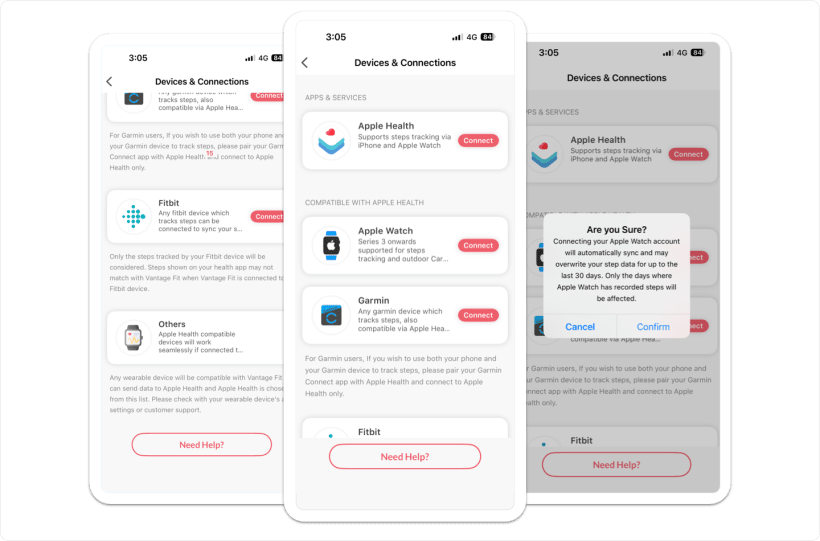
Connecting a device in the employee app.
Connect Fitbit or Garmin and it becomes the step source. Apple Health and Google Fit stop feeding steps, so no day is counted twice.
Steps arrive from known apps and devices. Unrecognised sources are rejected.
No. Phone sensors cover steps on both platforms. Most companies launch first and let people connect a device later.
Garmin, through webhook push. Fitbit syncs when the app opens and on demand, so treat it as near-live.
Both halves exist for one reason: a Garmin run and a phone-only step day land on the same participation number.
Single sign-on runs on your identity provider: Okta, Microsoft Entra ID, OneLogin, Ping Identity and most other SAML 2.0 IdPs. The integration team configures it with your metadata. There is no self-serve switch.
Create the SAML application and agree the identifier: work email or employee ID.
Your IT sends IdP metadata. We send SP metadata, redirect URIs and the assertion endpoint.
A small test group signs in and the round trip is verified.
SSO opens to everyone. Password sign-in stays on or comes off, your call.
On branding. SSO sends people to your IdP's own login page and branding. The Vantage Fit sign-in screen stays Vantage Fit. Full white-labelling is a separate build.
Your account manager sets the order.
HR admin CSV upload, SFTP, or an HRIS sync.
Most HRIS connections are client-specific. Confirm readiness with the integration team before committing to a launch date.
India, US, EU or UAE, chosen at onboarding.
Employees pick their own. System email follows.
Already running rewards and recognition? Employees reach Vantage Fit on the same account.
No. SAML setup runs through the integration team, with a metadata exchange and a pilot group. Budget time for your IdP team too.
Not without a migration. Pick India, US, EU or UAE before onboarding closes. Security and compliance has the detail.
We will walk the wearable connect flow, then the SAML exchange, with whoever owns each half.
Trusted by 100+ organizations.